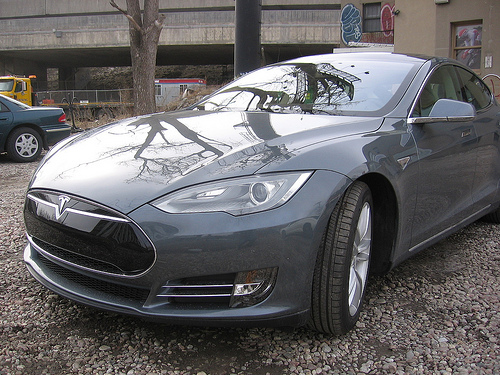
tesla photoTesla [stckqut]TSLA[/stckqut] is warning of production risks associated with the Model 3, the mass-market sedan the electric car maker expects to begin building within the next 18 months.

“We have no experience to date in manufacturing vehicles at the high volumes that we anticipate for Model 3…and plans for the build out of our production facilities…and various aspects of component procurement and manufacturing plans have not yet been determined.”

Tesla also cautioned that if one or more of its “many assumptions” turns out to be incorrect, its “ability to successfully launch on time and at volumes and prices that are profitable…may be materially and adversely impacted.”

SEC Form 10-Q

Source: Tesla discloses production risks of Model 3 – Tesla Motors (NASDAQ:TSLA) | Seeking Alpha
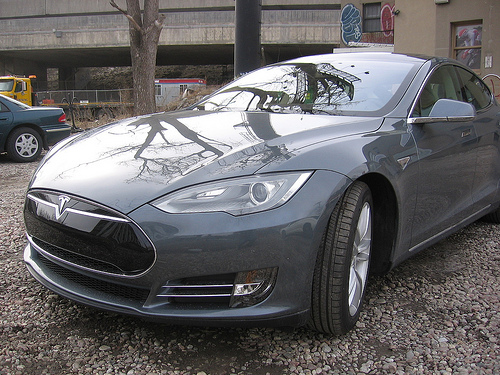
Photo by Schwar

After beating expectations in its first two FY 2016 earnings reports,Microsoft’s [stckqut]MSFT[/stckqut] multi-year turnaround seemed like it might finally have taken root. Unfortunately, its earnings miss last week came as a sharp rebuke to that idea, a fact not missed by investors.

To chart its path into the post-PC world, Microsoft has placed aggressive bets in growth markets, including big data and productivity tools. At the same time, many view Microsoft’s cloud-computing business as, perhaps, the company’s biggest opportunity, which is why investors should take note of the relatively weak performance of its cloud business this past quarter.

Though far from cataclysmic, Microsoft’s cloud business showed several signs of weakness in Q3, especially when considered in total. For starters, though growing faster than other reporting segments, Microsoft’s intelligent cloud business produced its slowest growth thus far in its fiscal 2016.

Source: Are Microsoft’s Weakening Cloud Margins a Cause for Concern?


Apple [stckqut]AAPL[/stckqut], the totemic icon of high-tech’s promise of eternal growth, reports its first revenue decline in 13 years. The Eurozone is back from the brink. The U.S. economy may not be.

And let’s not forget the dollar, which just finished its worst week against the yen since 2008. Or the Dow Jones industrial average, which turned in its worst performance since “the February freakout,” as CNNMoney artfully put it.

Optimists like Gavyn Davies acknowledge that the world economy is underperforming its long-term average for the third year running, but Davies wrote in the Financial Times on Sunday, “Global growth is somewhat better, especially in the emerging economies.” He headlined his blog, “Fading risks of global recession.”

And Robert Shiller, a Yale economics professor, says what you and I think matters. “Recessions aren’t caused merely by concrete changes in the markets,” Shiller argued in The New York Times on Sunday. “Beliefs and stories passed on by thousands of individuals are important factors, maybe even the main ones, in determining big shifts in the economy.”

Shiller suggests there’s more to economic wisdom than statistics will ever give us. If he’s right, we had better pay attention to what we see and what we hear.

I doubt anyone can say with certainty whether or not we’re in for another global recession. But it seems perfectly certain that it will depend on decisions taken soon.

The global economy has been given all there is to get out of low to negative interest rates, and it’s necessary to stimulate one way or another. Now the moment’s upon us: It’s time to stop talking and take the steps.

Economists, policy planners, and politicians will all have something to say. It’s the last we should worry about most, given that ideological preconceptions have been so prominently on display in Washington, London, Brussels, and nearly everywhere you look.

Source: If Consumers Don’t Open Their Wallets, We’re In for Another Recession | The Fiscal Times

Amazon.com Inc. [stckqut]AMZN[/stckqut] delivered its most profitable quarter ever, topping last year’s record holiday period, thanks to surging sales from its lucrative cloud-computing business.

Despite a persistent reputation as a profit miser, Amazon turned in its fourth straight moneymaking quarter and expanded margins in its core retail business, as well as the Amazon Web Services division that rents computing power to other companies.

Superlatives abound: Its 28% sales growth was the highest since the second quarter of 2012, while its operating margin of 3.7% was its best in more than five years.

The cash cow driving these figures is AWS, a decade-old operation that pioneered the business of hosting computer servers for companies like Netflix Inc. [stckqut]NFLX[/stckqut] and the Central Intelligence Agency. AWS has become the go-to provider for a generation of startups, government agencies and other corporations seeking to offload computing power to Amazon’s thousands of servers.

The cloud division’s sales rose 64% to $2.57 billion. While that is less than one-tenth of Amazon’s overall revenue, AWS generated about 67% of the company’s operating income in the quarter.

In other words, AWS is supporting Amazon’s sprawling, 20-year-old business that spends billions of dollars in an effort to upend traditional brick-and-mortar retail by providing customers nearly everything imaginable in as quickly as one hour.

Source: Cloud Unit Pushes Amazon to Record Profit

Fund manager Geoffrey Abbott is extremely committed. Or maybe he needs to be committed.

Every day for the past seven weeks, Mr. Abbott has read an average of 39 letters that CEOs write to shareholders in their companies’ annual reports. His goal is to peruse the annual report from each of the 3,000 largest companies in the U.S. This past week, Mr. Abbott, who runs a small New York investment partnership called GCA Capital, plowed through the I’s and moved into the J’s. That puts him him on track to finish with Zumiez, Zynerba Pharmaceuticals and Zynga by the end of May, when Mr. Abbott will turn 30.

Thus, in a financial world driven largely by mathematical formulas and computers trading thousands of times a second, a young investor is searching for investments in the most old-fashioned way possible: by reading.

Warren Buffett doesn’t think Mr. Abbott is crazy. The chairman of Berkshire Hathaway himself spent much of the early 1950s reading every single entry in the thousands of pages of Moody’s manuals, the corporate encyclopedia of that era. He still spends most of his time reading — including the letters to shareholders in companies’ annual reports.

Not many investors seem willing to do that sort of digging anymore. Timothy Loughran, a finance professor at the University of Notre Dame who studies corporate disclosure, has analyzed computer records for the Securities and Exchange Commission’s filings website. He says only 29 people a day download the average annual report when it comes out. Even General Electric’s annual report was downloaded from GE’s website only 800 times in 2013, according to the company.

Source: It’s Time for Investors to Re-Learn the Lost Art of Reading – MoneyBeat – WSJ