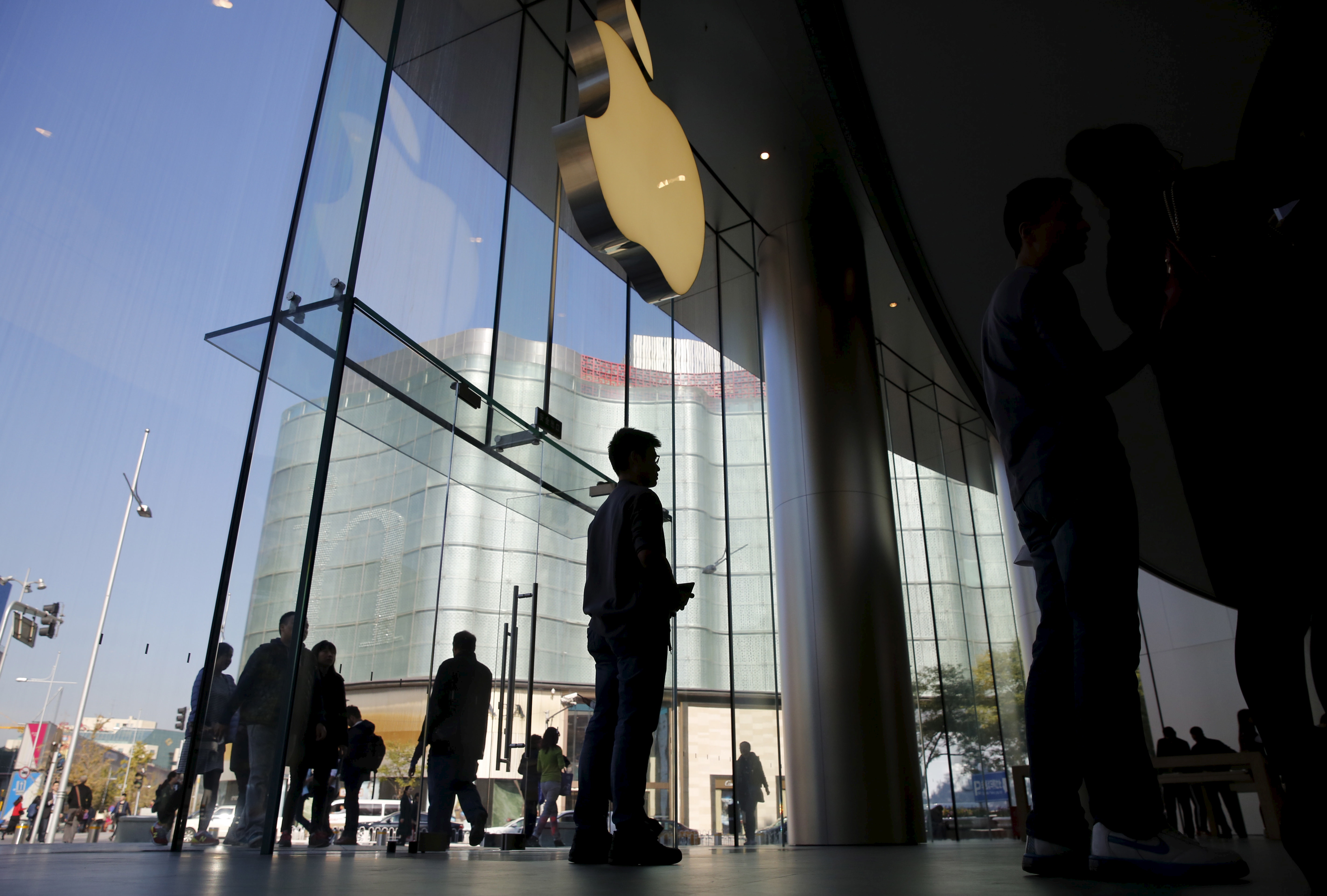
Whether through its Apple Pay mobile wallet or a new, person-to-person payments network reportedly in the works, Apple [stckqut]AAPL[/stckqut] wants to be at the center of consumers’ financial lives in the same way it has changed the way people communicate, listen to music and, if other ventures are successful, watch TV and even drive. Given Apple’s track record of disruption, the company’s plans could put the traditional financial services industry on the defensive.

The gadget maker is said to be in talks with several major banks to launch a personal payments service that would allow, say, friends to split a check or emigrants to send money back home via their iPhones. It would compete with existing services like Square, Android Pay or Venmo, which is operated by PayPal [stckqut]PYPL[/stckqut]. PayPal has seen its share price tumble since reports about Apple’s initiative emerged.

The Wall Street Journal said that Apple may launch the venture in partnership with JPMorgan Chase [stckqut]JPM[/stckqut], Capital One Financial Corp. [stckqut]COF[/stckqut], Wells Fargo [stckqut]WFC[/stckqut] and U.S. Bancorp [stckqut]USB[/stckqut].

The service could be a boon for those financial institutions in the short term. Although they would have to cede a portion of so-called interchange fees to Apple, likely about 15 percent, they could make up the difference in volume if an Apple-branded service encourages a spike in electronic payments. But longer term, market watchers say, the banks risk becoming an anonymous transaction engine rather than the all-encompassing service providers that currently play a central role in consumers’ financial lives.

Source: Apple Inc. Wants To Be Your Bank, And The Big Banks Should Be Worried
Media companies have admitted they have a Netflix [stckqut]NFLX[/stckqut] problem. What isn’t clear yet is which one will be first to step forward with a solution.

Licensing content to Netflix and other streaming services such as Amazon.com’s [stckqut]AMZN[/stckqut] Prime Instant Video has become a fast-expanding, high-margin source of revenue for the biggest content owners, including Walt Disney [stckqut]DIS[/stckqut], Time Warner [stckqut]TWX[/stckqut], 21st Century Fox [stckqut]FOX[/stckqut], CBS [stckqut]CBS[/stckqut], Viacom [stckqut]VIA[/stckqut], Discovery Communications [stckqut]DISCK[/stckqut] and AMC Networks [stckqut]AMCX[/stckqut]. But it is clear the presence of their shows on these platforms is hurting traditional TV ratings, which drive ad revenue, and making it easier for pay-TV subscribers to quit.

While pulling content from Netflix may be the right thing to do for media companies, the situation poses a classic prisoner’s dilemma: Who will be first to forgo short-term profits for the good of the industry?

Time Warner suggested recently it may be a candidate, if only because it didn’t appear to be shying away from short-term pain. Its stock took a hit after the company lowered its outlook for 2016. It is also investing more aggressively in content, technology and the consumer experience to help better position it for the future.

Source: The Netflix Problem: Which Media Company Will Solve It?

Christmas is weeks away, but many consumers are already prepping for the annual holiday spending extravaganza — and they may be on to something. Retailers, to be sure, are revving up the profit engines and setting their sights on Black Friday, traditionally the single biggest shopping day of the year. In the not-too-distant future, Christmas decor will be hanging from store rafters and weekly circulars will be advertising deals on coveted items. These tips can help consumers get their budgets in order, their money saved up and their plans in place for a smooth and financially sound holiday shopping season.

  1. Make a budget.
  2. Save now.
  3. Save up gift cards.
  4. Pay with cash.
  5. Purge to make room for new.
  6. Make a list and check it twice.
  7. Clip and save.
  8. Shop early.
  9. Sign up for alerts.
  10. Track your budget.

Source: 10 Savings Tips for Holiday Shopping – DailyFinance

Skyworks Solutions [stckqut]SWKS[/stckqut] posted fiscal 4Q financial results late Thursday that impressed investors and raised its EPS forecasts, sending shares rising almost 8% in recent market action.

At $1.52, EPS rose in line with the Street’s expectations during the quarter that ended Oct. 2 while revenue climbed 23% to almost $881 million. During the current quarter, Skyworks expects to earn $1.60 a share on revenue of $925 million to $930 million, besting the $1.57 and $921.5 million expected by the Street.

But it’s the company’s longer-term EPS guidance that caught everyone’s attention. Skyworks expects annualized EPS of $8 within the next two years, up from the $7 previous target. That overshadowed lingering worries that maturing iPhone sales will hurt Skyworks and other members of Apple’s [stckqut]AAPL[/stckqut] supply chain during the coming holiday season.

Source: Skyworks Raises the Bar; Sees $8 EPS in 2 Years

Facebook, Inc. [stckqut]FB[/stckqut] has released its third quarter earnings and the numbers look solid on all fronts. That may not be a surprise after the other online and tech earnings we have seen. Still, Facebook reported that revenue was $4.501 billion — up from $3.203 billion last year, and above the $4.37 billion consensus estimate from Thomson Reuters.

Facebook’s adjusted earnings were $2.41 billion with an adjusted operating margin of 54%. That compares to $1.459 billion and 57% a year earlier. The adjusted earnings per share (EPS) was $0.57, versus $0.43 EPS a year ago and versus the consensus estimate of $0.52 EPS.

Of the $4.501 billion in revenues, some $4.299 billion was in advertising – up 45%. Facebook’s total costs and expenses rose by 68% to $3.042 billion. Excluding the impact of year-over-year changes in foreign exchange rates, the company showed that total revenue would have increased by 51%.

Source: Facebook Posts Stellar Earnings, Even With Rising Costs, and Dominates in Mobile – Facebook (NASDAQ:FB) – 24/7 Wall St.